
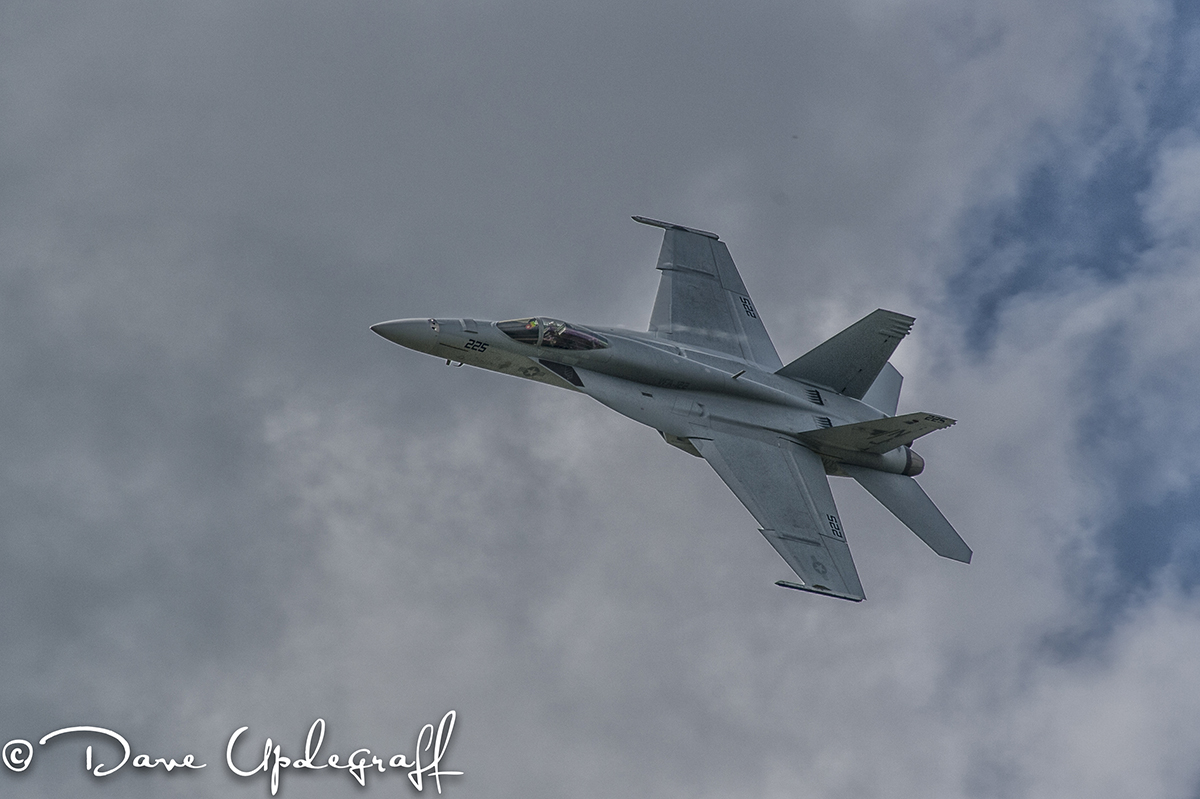
One of my very favorite segments of the airshow was watching the F/A 18 Super Hornet go through its routine. I do not watch much television unless it’s the Discovery Channel or the Military Channel. I’ve always been fascinated by military aircraft and the F/A 18 Super Hornet is one of my favorites.
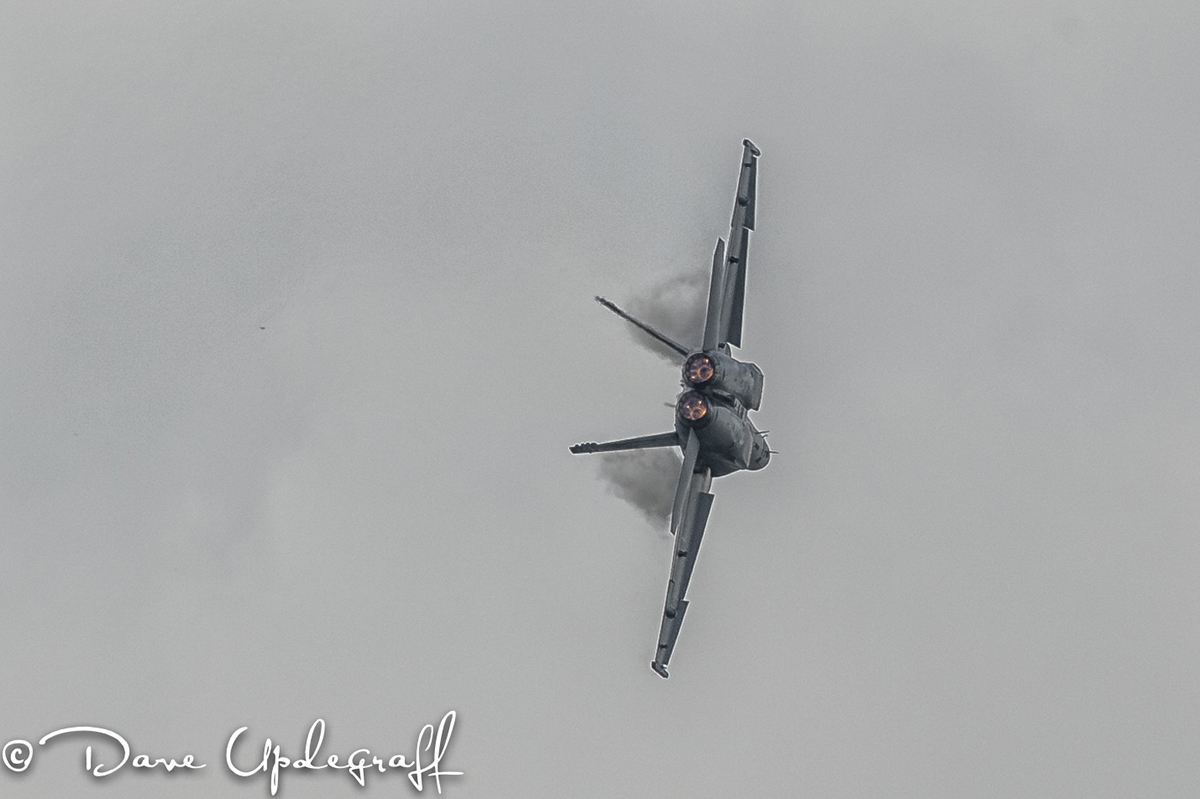
The Military Channel had a series on the evolution of the F/A 18 Super Hornet. Its predecessor the F/A 18 proved to be such a worthy aircraft the Navy decided to beef up the plane and what came out was the Super Hornet. Better, bigger, faster, more lethal.
The image above shows the Super Hornet in a full power (after burners) turn. The F/A Super Hornet replaces at least 3 different aircraft in the Navy’s fleet.
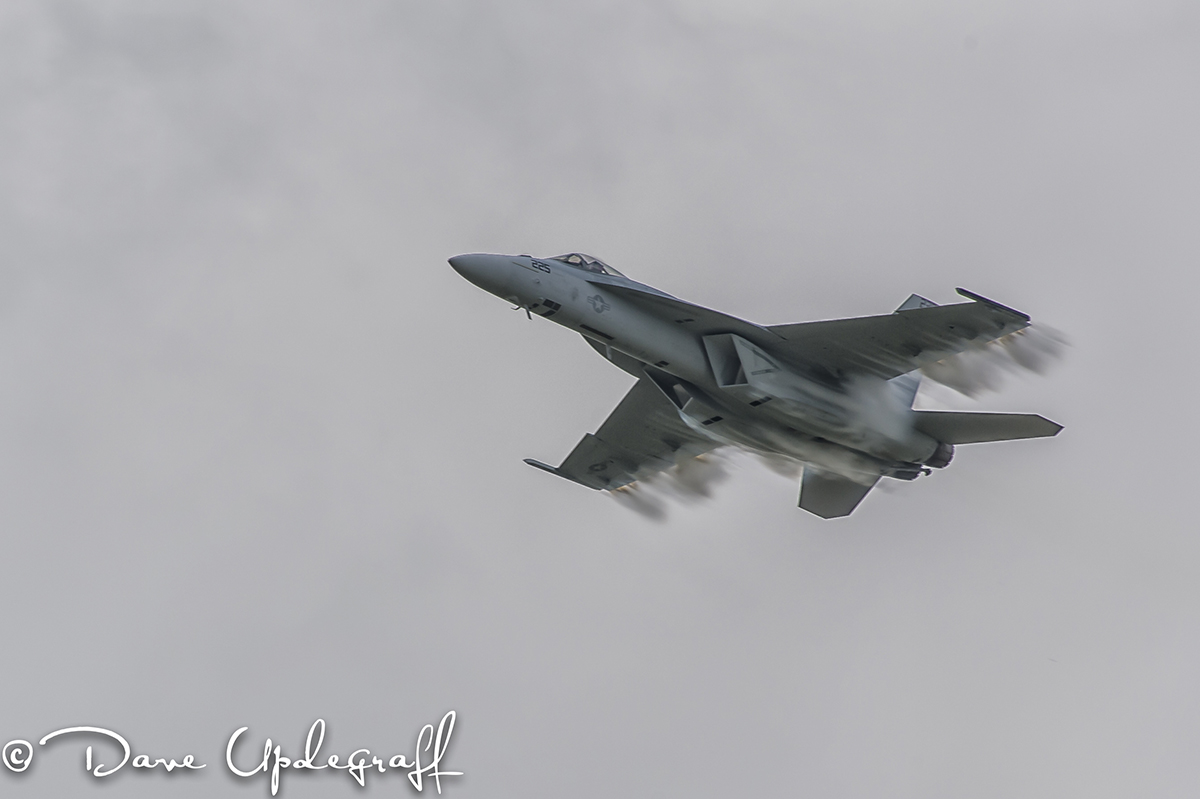
It is also the only aircraft that carries both the F (fighter) designation and the A (attack) designation because it is equally at home delivering ordnance in a strike configuration or as an air superiority fighter.
Above the Hornet flies by at 700 plus miles per hour, just under the sound barrier. Obviously in a metropolitan area he couldn’t break the sound barrier. He covered a lot of ground in a very short time. Imagine that he can double that speed and still have power left. Amazing!

The F/A 18 Super Hornet flies by in a landing configuration with the tail hook down. Navy pilots are called aviators because of their extraordinary ability to land on a carrier at sea. The neat thing about the Hornet is that it can be set up to make that landing by itself.
The Hornet can also level itself out of a spin if the pilot blacks out. If there are no inputs from the pilot the plane will correct for a spin. I watched this on the Military Channel and it was amazing. The test pilot would put the plane in a flat spin and then just held on, (simulating blackout) after an undisclosed amount of time the plane would correct its flight path and level out.
Tomorrow I’ll finish up the airshow with some images of the Thunderbirds (even though I have hundreds of additional images.) I received an e-mail from my Mother-in-law yesterday. She loves the barns and wants more pictures of Josh. Got to please my audience. 🙂
Thanks for stopping by. Enjoy your Thursday and look forward to Friday. Be careful.

 Upde Designs
In 1971, the Air Force requested proposals for a lightweight fighter. One of the winners was Northrop, who was awarded a contract in 1972 for two YF-17 prototypes. These would eventually transform into the F/A-18. A little known combat acrobatics area in North Carolina was used for evaluation. The Air Traffic Controller for the first flight into that zone was a rather handsome fellow; Sergeant Dana C. Andrews (USAF 1972 – 1976).Actually if I remember correctly, both the F-16 and F/A-18 are based on the YF-17 design (just tricked out differently).
LikeLike
Dana
What a thrill that must have been to be there for the very beginning. I didn’t know you were an Air Force Vet. Good stuff. I really enjoy watching the military channel. My first cousin (deceased) was a career Air Force Non-com.
Regards, Dave Updegraff ³People Rarely Succeed At Anything Unless They Have FUN Doing It.² My Blog | Photography | Web Site | Genesis Process
LikeLike